Let’s Cook: Gluai Buat Shee (Bananas in Coconut Milk)

This dessert is to die for! Served hot, this soup like concoction warms the belly, has the perfect amount of sweetness, and is the perfect end to a meal.

Gluai Buat Shee - Bananas in Sweet Coconut Milk

  • Servings: 2
  • Difficulty: easy!

Bananas in Coconut Milk
Bananas in Sweet Coconut Milk

  • 5-6 barely ripe bananas
  • 2 cups coconut milk
  • 1 cup coconut cream
  • ¾ cup sugar
  • 1 tsp salt

Method

  1. Peel the bananas and slice into ½ – 1 inch rounds. Set aside.
  2. Using low to medium heat, bring coconut milk to a boil in a pot.
  3. Add salt and stir. Add bananas and simmer until bananas are soft but not mushy, about 3 to 5 minutes.
  4. Add sugar and stir to dissolve.
  5. Let the pot simmer gently until bananas are slightly softer, another 3 to 5 minutes.
  6. Remove from heat and add coconut cream on top.
  7. Let cool to warm before serving.

Notes:

Where to buy coconut cream? Any Asian market should have cans of coconut milk and coconut cream. Make sure you buy the correct one. If you can’t find it, buy a can of coconut milk and do not shake it before opening. There should be a layer of thick white cream on the top and the milk separated on the bottom. You can use the top portion as the cream as well. There is also powdered coconut cream available at many Asian markets as well.

Tip: Sprinkle the top of sesame seeds to add a little crunch.

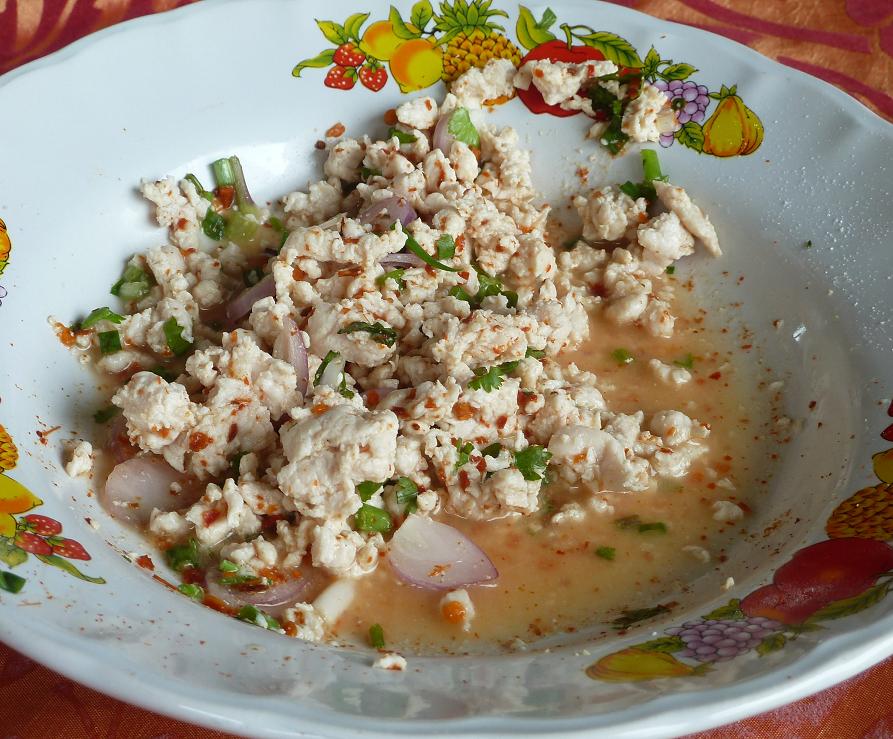
Laab Gai

Let’s Cook: Laab Gai (Savory Chicken Salad)

This dish originated in Isaan, the Northeastern region of Thailand. There are many ways to spice up this recipe and it has become one of my all time favorites here in Thailand. I like to eat it with sticky rice–another one of my favorites!

Laab Gai - Savory Minced Chicken Salad

  • Servings: 2
  • Difficulty: intermediate

Ingredients

Laab Gai
Savory Minced Chicken Salad

  • 1 lb chicken, ground
  • ½ cup water, if necessary
  • 2 large shallots, peeled and finely sliced lengthwise
  • 1 TBSP toasted rice powder
  • Fish sauce, to taste
  • Lime juice, to taste
  • Ground dried red pepper, to taste
  • ½ cup cilantro leaves
  • 1/3 cup mint leaves

Method

  1. In a skillet, sauté chicken until cooked through. Do not brown the chicken. There should be some juice in the pan. If not, add up to a ½ cup of water to keep moist.
  2. Remove chicken and immediately add shallots. Toss thoroughly to wilt shallots.
  3. Add 1 TBSP fish sauce and 1 TBSP lime juice. Toss everything together and taste. Add additional fish sauce and lime juice to taste (2 TBSP fish sauce and 4 TBSP lime juice is average final amounts).
  4. Add toasted rice powder, toss. Add 1 tsp chili powder and toss. Taste and add additional chili powder to preference.
  5. Add mint leaves and cilantro and toss thoroughly. Serve.

Sticky or Not Sticky?

One of my biggest questions when I arrived here in Thailand, aside from wondering what people were saying or why everyone was smiling at me all the time, was how to tell the difference between regular rice and sticky rice.

Once cooked, the differences are quite obvious. Sticky rice sticks together and regular rice doesn’t. It’s as simple as that.

The process leading up to the final product is what confused me. Do you use the same type of rice? Do you cook it in the same way? What gives sticky rice it’s stick?

I’m still not all that clear on the topic, but I have learned enough to give you a brief rundown in case you also were wondering.

First and foremost, the more glutenous the rice, the more sticky. So, rice with more gluten, when cooked, is going to stick together more. This is what attributes to the differences in stickiness between rice in Thailand (not very sticky) and rice in countries like Korea, China, and Japan (more sticky).

Generally, rice that is longer is less glutenous and therefore less sticky … hence long grain rice in the states being a part of the non-sticky variety.

As for how to tell the two apart, the length of the grain is the first factor. Again, the longer the grain, the less sticky. The shorter the grain, the more sticky. Additionally, the color of the rice can help you decipher stickiness. If the rice is white, it’s most likely not going to be sticky. If the rice is opaque (aka you can see through it), you’re on the right track to the sticky version.

If you’re going out to buy rice at the store, you’ll most likely only find “sticky” rice at an Asian market or store and it will most likely have a name such as “Sweet Rice” or something of the sort. You can ask them to help you find the right one. I haven’t tried it so I’m not really sure how the search would go.

When it comes to actually cooking the rice, there are two very different methods. I’ll admit, at the moment I’m not an expert in these differences. I know how to cook regular rice in a pot or rice cooker. I’ve never made sticky rice (not yet at least!). I do know though that the main difference is the use of water. With regular rice you boil and let the water evaporate/get soaked into the rice, and in the end your rice is nice and fluffy. With sticky rice, you don’t use water. You soak the rice for a half hour or so, but then you drain it and use a sticky rice steamer to steam the rice. Again, not quite sure how this works, but in the end you get the sticky concoction rather than the fluffy kind.

Looking back at this article I realize I have a long way to go in my knowledge of Thai cooking! Hopefully I can provide you a better update down the line once I’ve tried my hand in this rice cooking business!

A Tasty Tease

It’s going to be a little while before you get my first attempt at a recipe, but I thought I’d whet your appetite by giving you some pictures of the meals Cory and I made during our cooking class. I will definitely be attempting these recipes again along the way. Enjoy!

Tom Kaa Kai
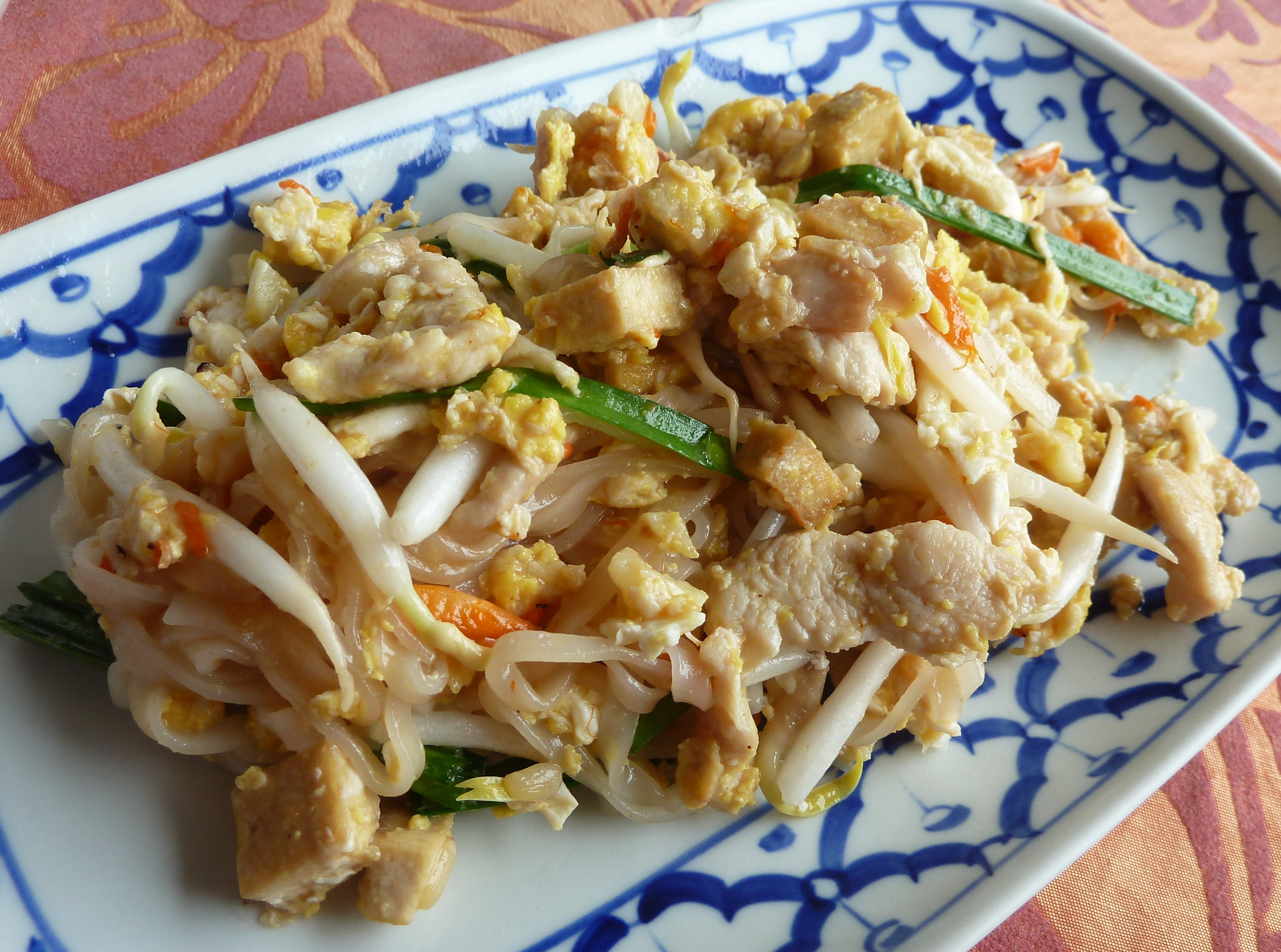
Pad Thai: A Traditional Favorite
Tom Yam Gung and Kai Phat Met Ma Muang
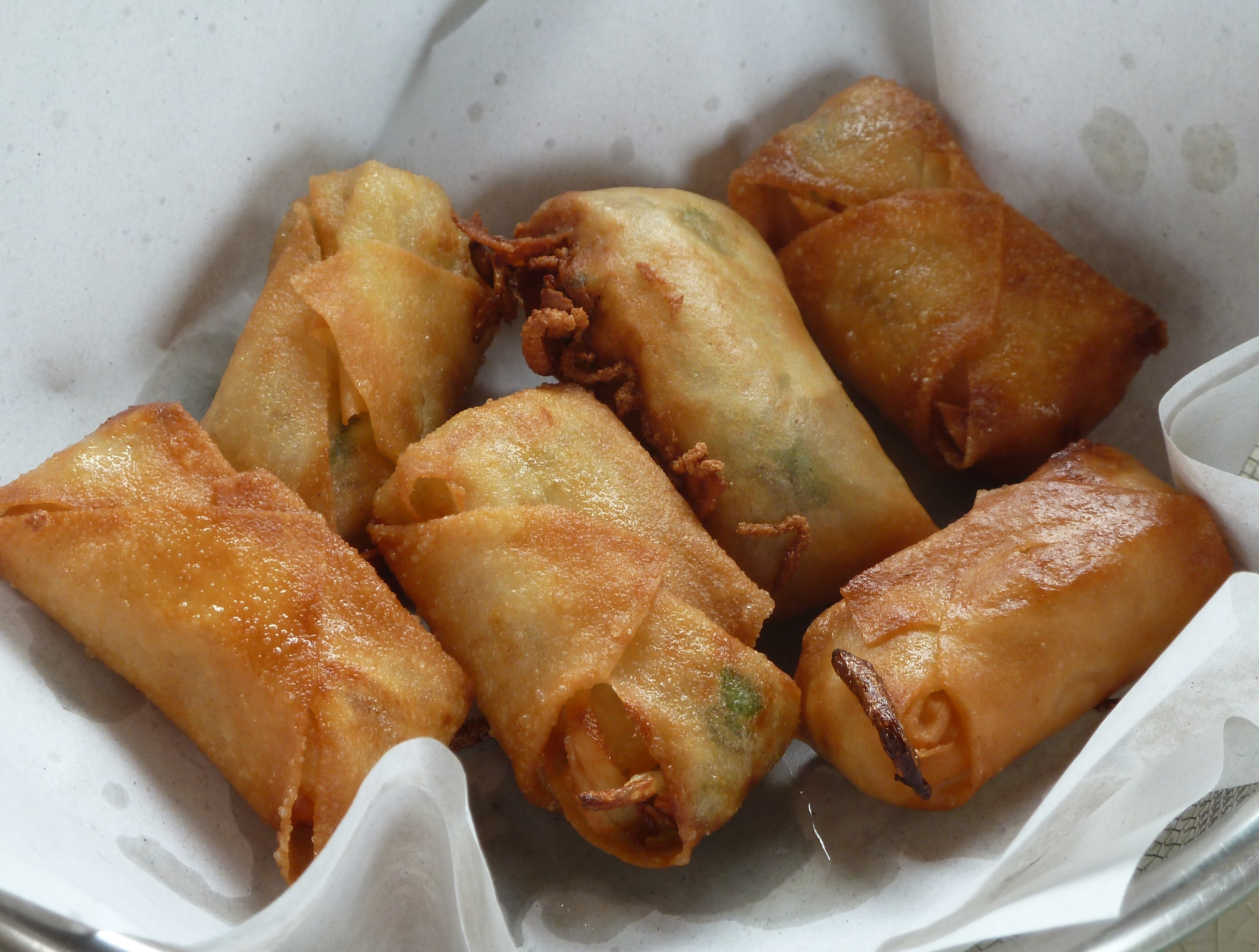
Paw Pia Tawt
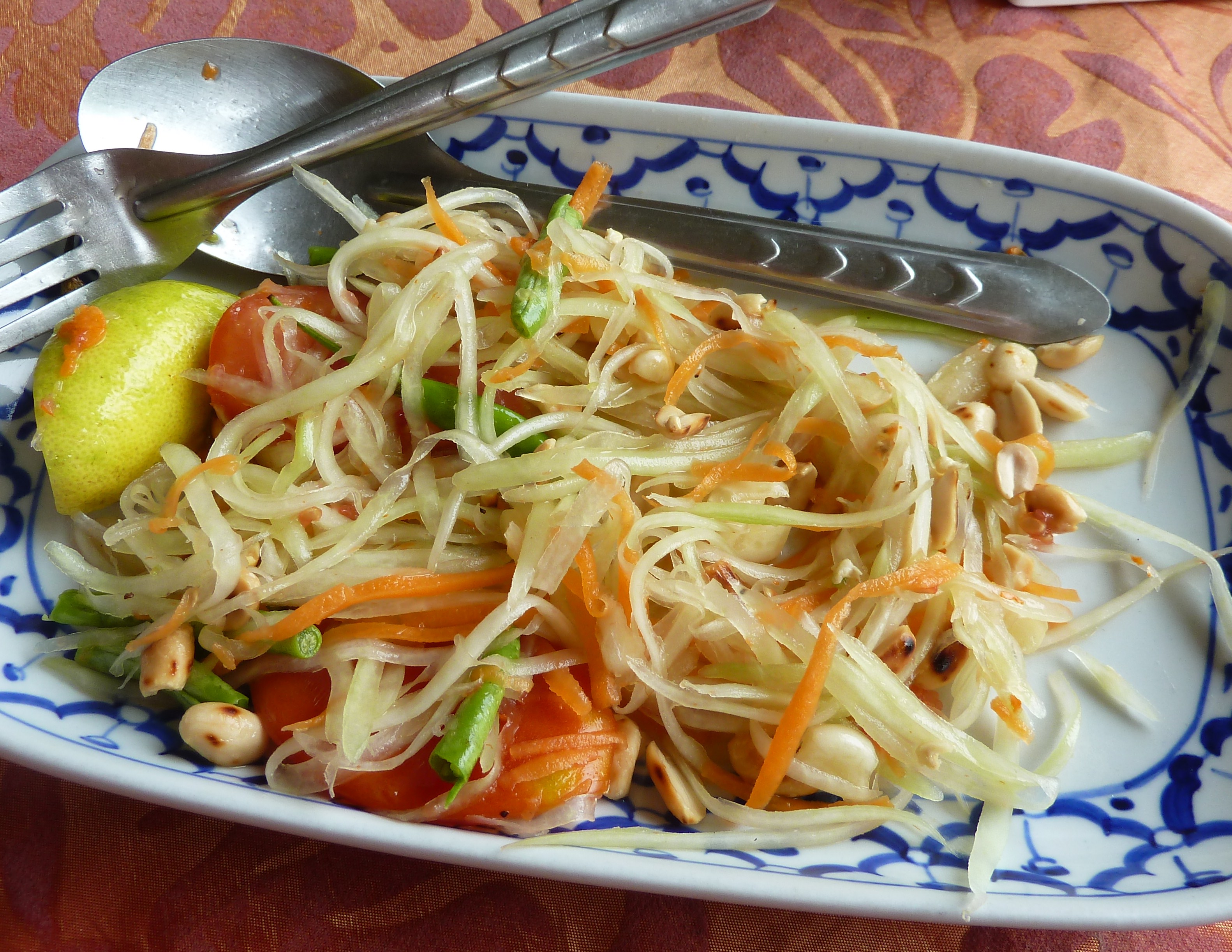
Som Tam
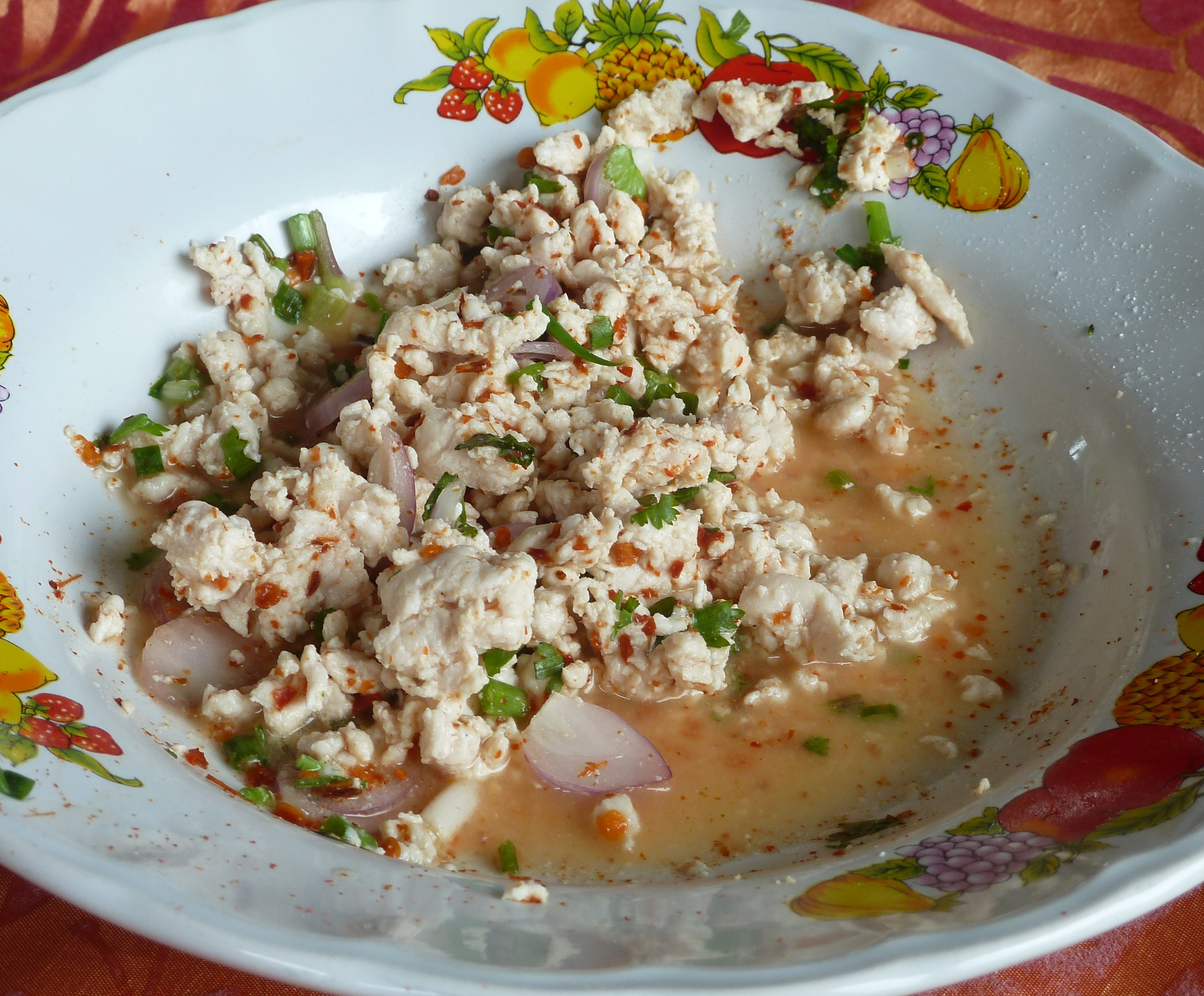
Laab Gai
Geng Kiao Waan Gai
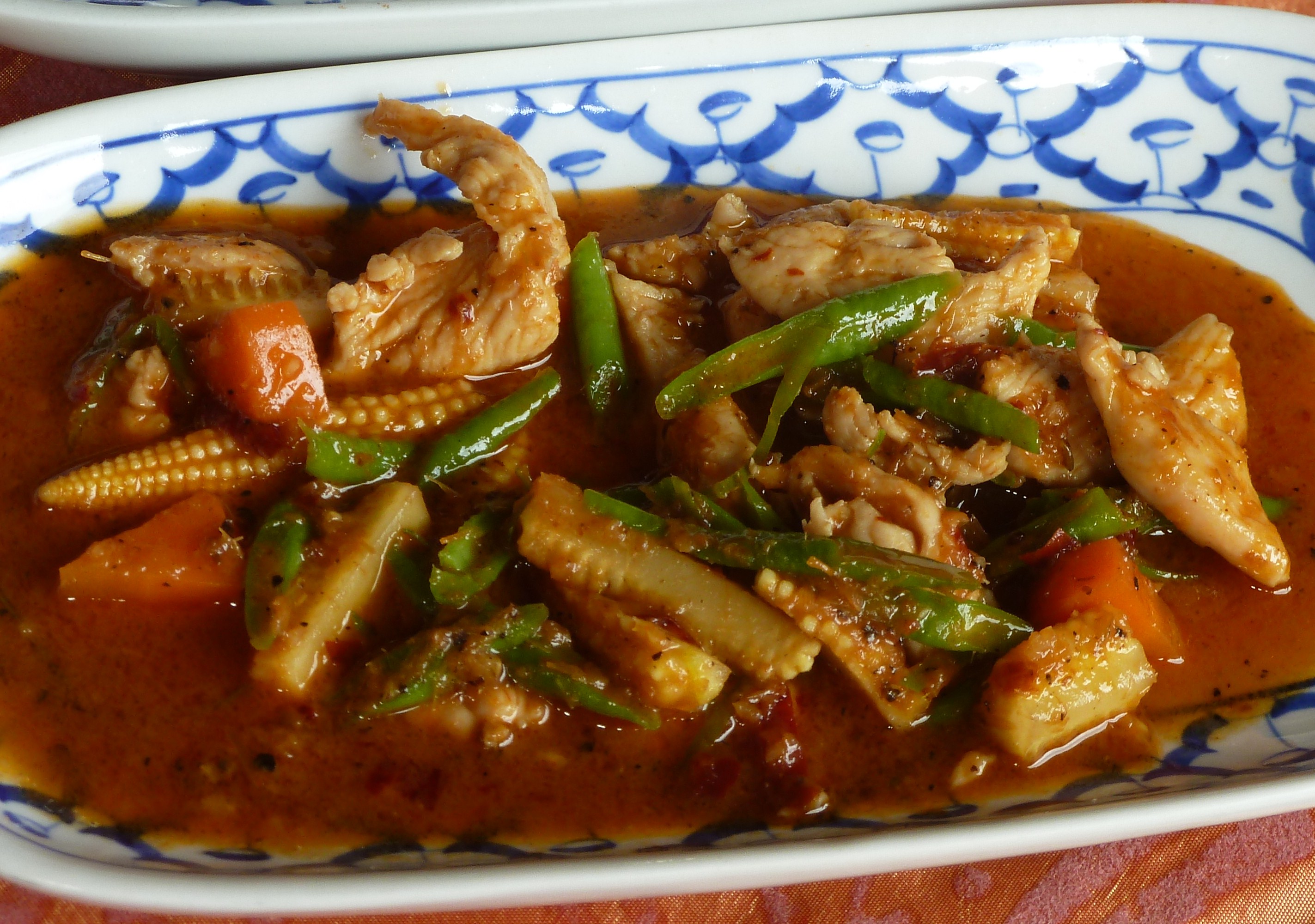
Paneng Gai
Gluai Buat Shee
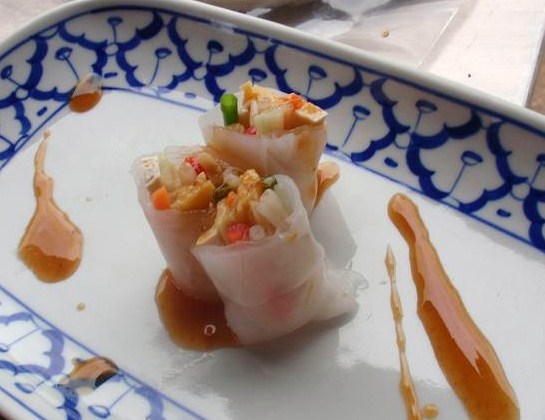
Fresh Spring Rolls
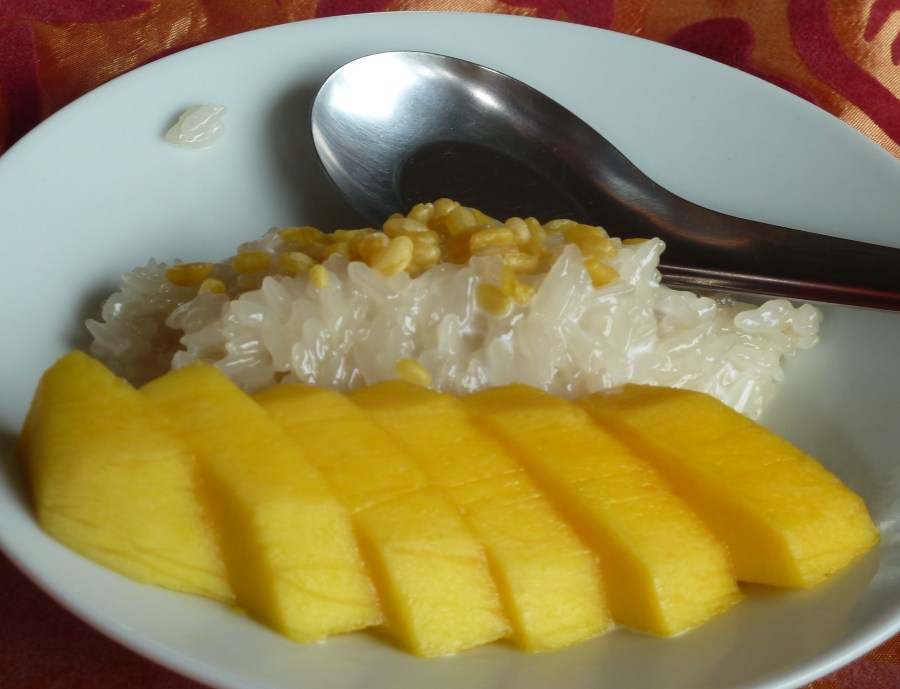
Kaao Niao Ma Muang

Smart Cooking Chiang Mai

Smart Cooking is the company through which Cory and I found our passion for Thai food! It’s one of the many cooking schools available up in the Chiang Mai area and while I haven’t been to any of the other schools, I’m going to recommend this one above all of them. It was an amazing experience!

For about $30 U.S. dollars you get the following:

  • Pick up and drop off from your hotel
  • Train ticket (and beautiful ride) to a local town
  • Bicycle ride to the cooking studio (a quaint little house)
  • Opportunity to learn about Thai herbs and pick your own from the organic garden on site
  • Personal instruction on cooking six different dishes and one curry paste (all of your own selection)
  • Great company from both the Thai instructor and your classmates
  • Beer service! They’ll even do a beer run so you have something to drink while you eat your yummy food!

All in all, this was a fantastic experience. Cory and I both agree that this was by far the best thing that we did on our trip. If you’re ever in Thailand, specifically Chiang Mai, I would highly insist you check them out!

You can find them online at http://www.chiangmaismartcook.com!